Silent Retreat: How Detoxing Sound Can Reset Your Nervous System

How Detoxing Sound Can Change Your Nervous System
In this article
- How silence helped me overcome fear & how it changes your nervous system
- High stress, trauma and sound
- Why we need to detox sound
- Invitation if you are ready to feel the shift into serene from overwhelm

My Story: From Noise to Nervous System Reset
Sarah King - Trauma Informed Somatic Coach
I had been grafting for six months with no break. Between two businesses, one job, a home and garden to tend to, gym workouts, activism and charity work, socialising, and learning — there was a lot on my plate.
My body was feeling it: tense shoulders, an unhappy digestive system, and a constant state of anxiety that made sure I kept busy, rushing around and never pausing.
This stress created the relentless pressure of time — a full to-do list and never enough hours. I felt like I was drowning in noise and responsibility.
Then came an unexpected shift. On a family trip to Italy, where the forest meets the sea, I announced I’d be taking a day of silence on the Summer Solstice. Just me and the for-rest.
What happened was unbelievable. I witnessed my nervous system shift from fawn state (people-pleasing, exhausted, disconnected from my needs) into face mode — resilient, relaxed, and ready in just a few hours.
Fawn mode looks like:
- Neglecting personal needs and boundaries
- Always saying "yes"
- Hyper-awareness of others’ moods
- Inability to identify your own feelings
- Guilt when not helping others
Face mode feels like:
- Resilient and open
- Clear and confident
- Energised and joyful
- Connected with curiosity and health
For me, that shift was powerful. After two near-drowning experiences in my past, I had avoided swimming out of my depth and being cautious in the sea. But with my nervous system soothed by silence, my confidence soared. On this holiday, I found myself diving into the water headfirst — fearless, free, and fully alive. I even practiced free diving, a truly magical way to be with the water element.
My fears were diminished and my connection to life was restored.
Recognizing a Stressed Nervous System in Daily Life
Do Any of These Feel Familiar?
Life is demanding. Holding down a career, managing family commitments, keeping up with social obligations, and staying “on” 24/7 can leave anyone’s nervous system stuck in survival mode.
Sometimes it shows up in ways we don’t even notice at first. See if any of these resonate with you:
- Scrolling endlessly at night because your mind just won’t switch off
- Pouring a glass of wine or reaching for snacks to unwind after a stressful day
- Snapping at loved ones over small things, even when you don’t mean to
- Forgetting simple tasks or feeling foggy when you try to focus
- Shoulders that seem permanently tense, or a jaw that stays clenched
- Feeling wired but tired — exhausted yet unable to rest deeply
If you recognise yourself here, you’re not alone. These are normal coping mechanisms your body and mind use to get through stress. They work in the short term — but they won't create the deep reset your system is truly craving.
The Science: Trauma, Stress & Sound
Trauma and stress don’t just live in your thoughts — they change how your nervous system processes sound.
When you’re under pressure, your body engages survival responses. This alters the way the middle ear and vagus nerve work, making it harder to filter out background noise and leaving you more sensitive to sudden or loud sounds.
- Polyvagal Theory (Dr. Stephen Porges) shows how the vagus nerve connects sound, safety, and social connection. When your body feels unsafe, your ears literally tune differently — prioritising threat detection over relaxation.
- Studies show that noise exposure increases cortisol, the stress hormone, which can affect heart health, digestion, and sleep.
- Silence, on the other hand, has been linked to neurogenesis in the hippocampus (a brain region key for memory and emotion regulation). Just two minutes of silence can be more relaxing than listening to calming music.
So if you’ve noticed that busy cities, crowded rooms, or constant notifications make you feel on edge, it’s not “in your head” — it’s your body signalling overload.
Why Detoxing Sound Matters
Just like we detox from unhealthy food or over stimulation, our nervous system needs breaks from sound.
Silence helps restore balance by:
- Lowering heart rate and blood pressure
- Activating the ventral vagal state — the body’s healing mode
- Encouraging alpha and theta brainwaves, which support creativity, rest, and reflection
Silence isn’t emptiness — it’s medicine. Your nervous system repairs in stillness and slowness.
Easing Into Silence: It’s More Familiar Than You Think
If the thought of a silent retreat feels intimidating, you’re not alone. Many people worry it will feel awkward, lonely, or “too much.”
But here’s the truth: you already know the comfort of silence. Think of the quiet hour you’ve enjoyed while reading a book, sitting in a yoga class, or resting in meditation. Remember how nourishing that pause felt?
A silent retreat is simply a way of gently extending that same feeling — giving your nervous system more time to reset and your mind more space to breathe. You’re not depriving yourself; you’re gifting yourself more of what you already know brings relief.
Why We Host Retreats at Potent Times
Our retreats are intentionally timed with the Winter season and new moons — moments in the year that are naturally aligned with rest, reflection, and renewal.
- Winter invites us inward, encouraging stillness and recalibration before the energy of spring.
- New moons are potent times to get quiet, listen deeply to your inner voice, and plant seeds of intention for the cycle ahead.
By aligning silence with these natural rhythms, your experience becomes not just restorative, but deeply meaningful — offering clarity, direction, and a sense of alignment with life itself.
An Invitation: Enter the Healing State
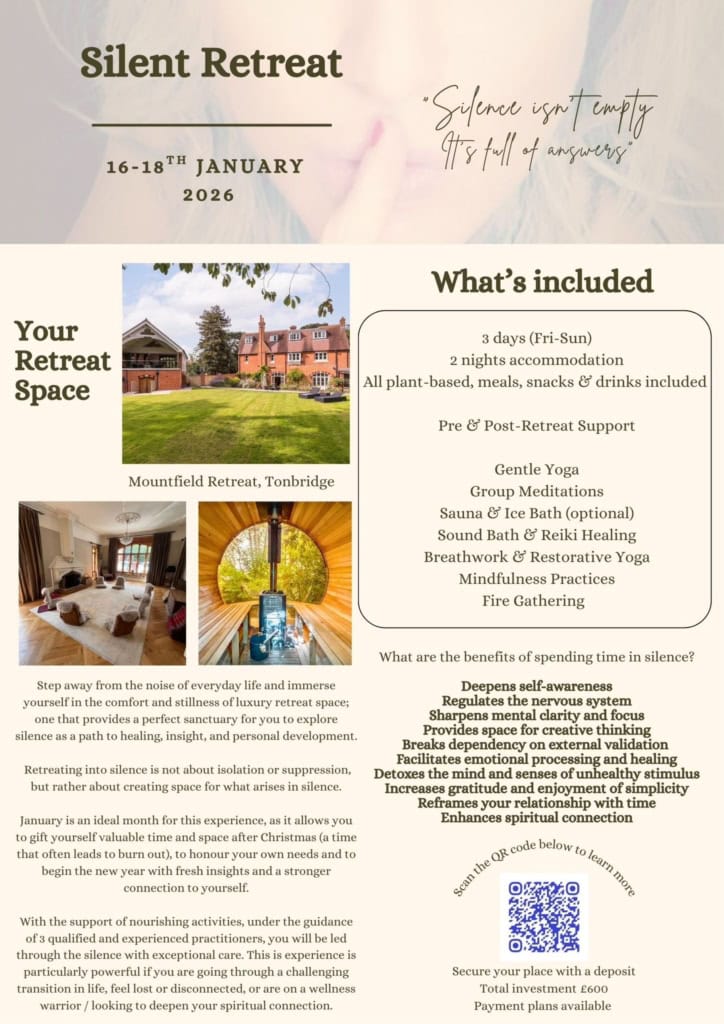
New year, new state. This January 2026, we are hosting a Silent Retreat designed to help you:
- Detox from noise and stress
- Reset your nervous system as a starting point for healing from chronic illness, anxiety and exhaustion
- Find clarity and vision for the year ahead so you access a vision for a meaningful year
After the busy holiday season, your body and mind will naturally crave space to breathe. We invite you to join us in stepping away from overwhelm and into serenity.
Ready to find out more about our next retreat?
Read More Here About Upcoming Silent Retreat
Further Resources
We have a podcast: Holistic Health Sister's Podcast
Listen to a man's perspective on retreats & silence. Lighting the Way: Supporting Someone’s Spiritual Path" (Ep. 27)
The Power of Retreats: Why Every Woman Deserves Time Away to Reset and Renew (Ep.35)